Insurance Readiness Scorecard
Chapter 13: Transaction Insurance
Self-Assessment
Editable Word document
(.docx) + print-ready PDF
"If fraud happened today, would your insurance claim survive?"
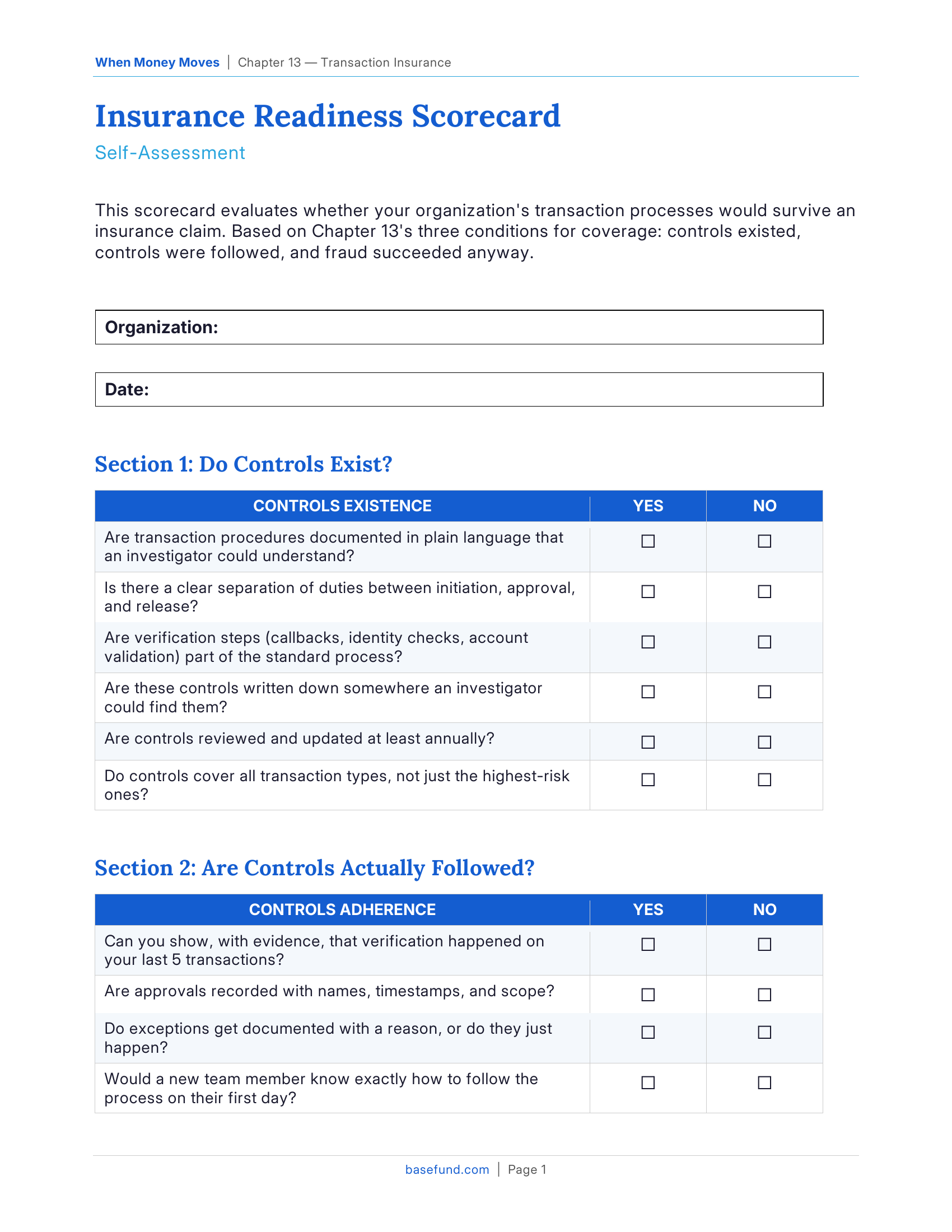
Chapter 13: Transaction Insurance
Self-Assessment
Editable Word document
(.docx) + print-ready PDF
"If fraud happened today, would your insurance claim survive?"
Risk managers, CFOs, treasury directors, and anyone responsible for the organization's insurance coverage and claims readiness.
Insurance pays based on whether you can prove controls existed, prove they were followed, and prove fraud succeeded despite them. The gap between "we have policies" and "we have evidence" is where claims die.
Enter your work email to download the PDF and editable DOCX.
This resource is a companion to Chapter 13: Transaction Insurance of
When Money Moves.
The chapter provides the full framework — this tool helps
you apply it.
Get the Book